


Datacenter Backbone
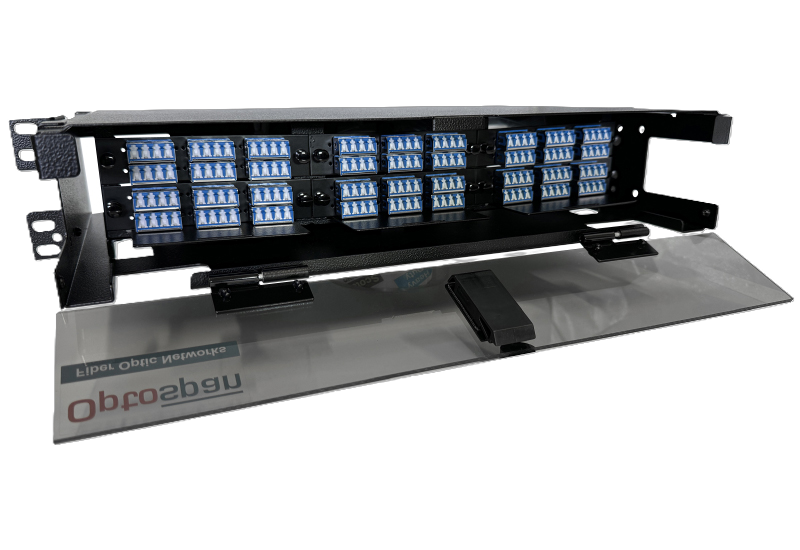
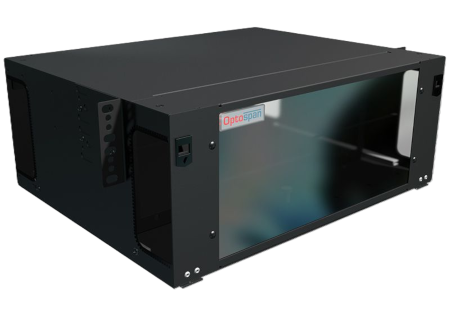
Fiber optic communication has become the backbone of modern datacenters, enabling the rapid, reliable transfer of vast amounts of data between servers, storage systems, and networking devices. Unlike traditional copper cabling, which relies on electrical signals, fiber optics transmit information as pulses of light through strands of glass or plastic. This allows data to travel at near-light speeds with minimal loss, making it ideal for supporting the high bandwidth and low latency demands of today’s cloud computing, artificial intelligence (AI), and big data analytics workloads.
One of the major applications of fiber optics in datacenters is in high-speed interconnects—both within a single facility and between geographically distributed datacenters. Internally, fiber links connect top-of-rack (ToR), aggregation, and core switches, supporting data rates of 100 Gbps, 400 Gbps, and even beyond with emerging 800 Gbps and 1.6 Tbps technologies. Externally, fiber optic cables form the backbone of wide area networks (WANs) that interconnect cloud regions and edge locations across continents, ensuring seamless data replication, failover, and content delivery.
Benefits & Challenges
The benefits of fiber optics are numerous. They provide extremely high bandwidth capacity, low signal attenuation over long distances, and immunity to electromagnetic interference—an essential advantage in the densely packed, power-intensive environments of datacenters. Moreover, fiber’s small physical footprint allows for higher-density cabling and improved airflow management, contributing to better thermal efficiency and lower operational costs. As datacenters scale to handle petabytes of data and millions of virtual workloads, fiber’s scalability ensures continued performance without major physical overhauls.
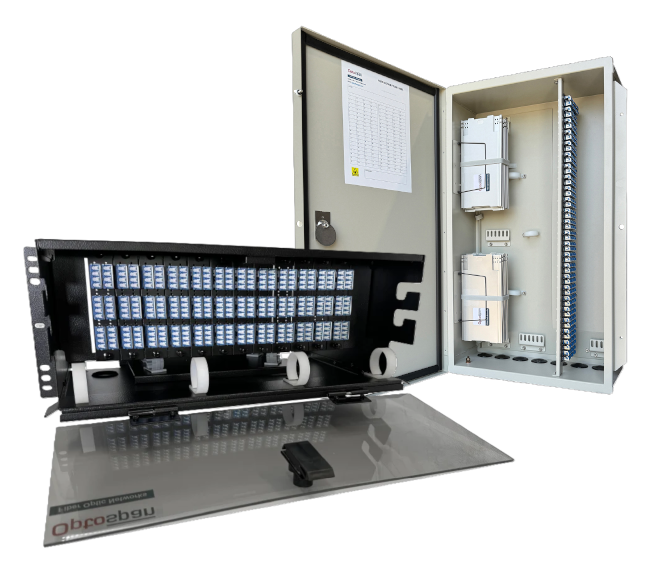
However, the deployment and maintenance of fiber optic systems come with intricacies and challenges. Installation requires precision, as fiber strands are fragile and must be carefully terminated and spliced to minimize signal loss. The cost of transceivers and optical components can also be significant, especially at higher speeds or over long distances. Additionally, managing complex fiber infrastructures—especially in hyperscale datacenters—demands sophisticated monitoring tools to detect degradation, maintain redundancy, and ensure uptime. As the industry moves toward ever-faster optical interconnects, challenges such as thermal management, signal dispersion, and the integration of co-packaged optics with switches and CPUs will continue to shape the evolution of fiber communication in datacenters.
Optical Architecture & Network Design
In essence, fiber optics form the nervous system of the digital world’s infrastructure—delivering the speed, reliability, and scalability required to power everything from streaming and e-commerce to AI and cloud computing.
Needless to say that the appropriate design of an organization’s fiber optic infrastructure has become ever more important, yet all the more complex. This is where Zibiz’s field of expertise becomes useful with their innovative fiber optic products and solutions. In order to leverage our experience in addressing your organization’s specific fiber optic infrastructure requirements, please give us a call!